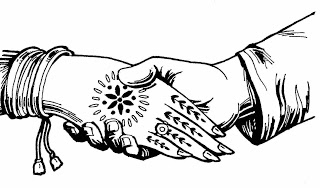
“A PERFECT RELATIONSHIP IS TWO IMPERFECT PEOPLE REFUSING TO GIVE UP ON EACH OTHER” (unknown)
Let’s go one step further and redefine it as
“A PERFECT RELATIONSHIP IS TWO IMPERFECT PEOPLE REFUSING TO GIVE UP ON EACH OTHER FOR THE DURATION OF TIME THEY HAVE BEEN GIVEN WITH EACH OTHER”
There is an inherent difference between a man’s and a woman’s psychology. We already know it. But what we don’t know is how to practice accepting and working around these differences in a marriage. Man-woman relationships are inevitable in this material world. But there are certain fine, subtle rules that govern such relationships between ‘inherently free-willing’ living beings. “Contact between man and woman is natural, but that also must be carried out under regulative principles so that social consecration may not be disturbed or unwanted worthless population be increased for the unrest of the world.” (Srimad Bhagavatam 1.14.42).
Firstly, we need to understand that between a man and woman, one is not better than, or inferior to the other; just that they are different and meant to handle different roles and responsibilities with consideration or cooperation – not competition. When both genders understand this, it brings about the much-needed peace and happiness in today’s family setups. Men and women are plain different – just like how apples are different from oranges (but both fruits can be offered to the Lord just as beautifully). When this difference is respected and accepted with love and patience, there is a good chance that the painful separation rates around the world will decline. This must begin with the acknowledgment of the basic fact of life: what we feel our partner should do and what they really do are poles apart. Let’s break that down:
Every human being is under the influence of three modes of material nature:
- Mode of Goodness
- Mode of Passion
- Mode of Ignorance
Even a man and woman relationship is forged under the influence of such a mode. It is said in the Bhagavad Gita, “The mode of passion is characterized by the attraction between man and woman. Woman has attraction for man, and man has attraction for woman. This is called the mode of passion. And, when the mode of passion is increased, one develops the hankering for material enjoyment.” BG 14.7 : PURPORT. It is also said in the BG 18.38 purport that “A young man and a young woman meet, and the senses drive the young man to see her, to touch her and to have sexual intercourse. In the beginning this may be very pleasing to the senses, but at the end, or after some time, it becomes just like poison. They are separated or there is divorce, there is lamentation, there is sorrow, etc. Such happiness is always in the mode of passion. Happiness derived from a combination of the senses and the sense objects is always a cause of distress.”
So, what?! Aren’t we supposed to feel or even look at the opposite gender? Why and where is it wrong? What should I do about my desires? Why is it wrong to be married, enjoy physical joys, and what we are made of in this world? What is wrong in pursuing pleasures when that is what we see everyone strive for? Why should our pleasure pursuit stop if we do not succeed at first? Does life have to end with one bad decision or unhappy outcome?
Before we get to the bottom of these questions, let us explore what is the length, depth, and breadth of this dimension of life we are dealing with, and what is the beginning and end of this paradigm. It is at this stage you, the reader, may decide if you want to delve deeper because there is no promise here of easy or palatable answers. There is no assuring you any comfort of familiarity or ease of assimilation. It is pure truth that exists, did exist, and will continue to exist irrespective of its acceptance, acknowledgement, or adoption by you or anyone. This is both the truth and the dare. Read on if you dare to know the truth. The success of your relationships in this world depends on your acceptance of these postulates or rules of spiritual dimension.
Rule 1: The Vedic scriptures have always egged on human beings to ask questions, explore, deliberate, dissect, and find the original position and personality we all have hidden somewhere. The first aphorism of Vedanta sutra is ‘athato brahma jignasa’ which roughly means “now is the time to inquire about the absolute truth.” The problem is that the ‘now’ is a continuum which keeps moving along with the human’s pursuits and is always present conspicuously, ready to be activated whenever we decide our ‘now.’ This is a beautiful state we live in without being conscious about it for many life times. The ‘now’ is actively dormant. And it could take anything from a moment to a millenium for you to become cognizantof it. Unless this ‘now’ is somewhere actively present on our radar, always reminding us of our impending boarding of the train and stop lingering forever in the railways stations of life, all our calculations and conspiracies to win over the race of life our way, will always be met with nature’s “my way, or highway” challenge. The Bhagavad Gita 7.14 calls this nature of material life as ‘duratyaya’ (very difficult to overcome). Because this nature, which we so like to impersonalize and control is actually daivi (of divine nature and is God’s external energy). If you have got this far and are interested further, here are few more principles to assimilate to understand the nature of human relationships.
For the first time in the Gita, Lord Krishna reveals that we are not this body in BG 2.13 when he says, “dehinosmin yatha dehe..”. He clearly differentiates the person from the body when He uses the word dehinah. The next few texts from then on clearly differentiate between the body and one who inhabits the body. These verses reiterate this principle of a personality different from the material body and the one who animates the body. Understanding yourself and your real nature is the first step and duty towards a good relationship.
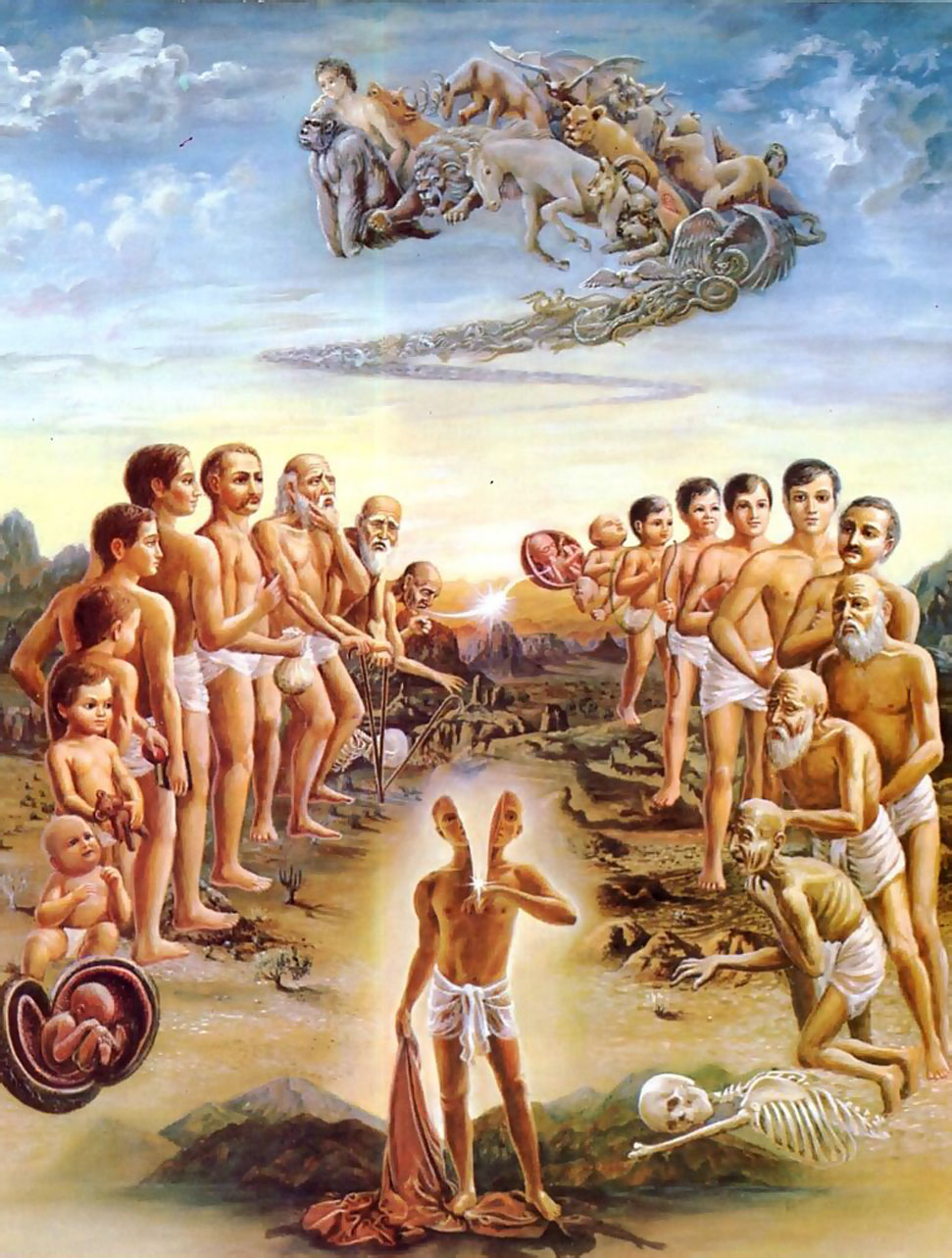
Second Rule: Next comes the nature of this real personality who animates the body. We call it the jiva, atman, anu etc. The innate nature of the jiva is ananda – to be happy, to gravitate towards happiness. Every other construct around this jiva not innate to it, is in entropy. It is an unstable system and not meant to last. The problem begins with the jiva thinking of enjoying or trying to extract as much enjoyment from this unstable, inconsistent, and raw scalar power of the material energy, which is a poor reflection of the spiritual emotions and mellows. It is impossible for the jiva to weild this massive, superlative, and devastatingly beautiful energy of the Lord – Maya. The tiny jiva is not built to brandish or flaunt this energy feature of the Lord. Srila Prabhupada very tactically uses the word potency to describe the unlimited energies of the Lord. The Maya potency of the Lord is not the eternal playground of the jiva. It is designed to frustrate and defeat the tiny jiva
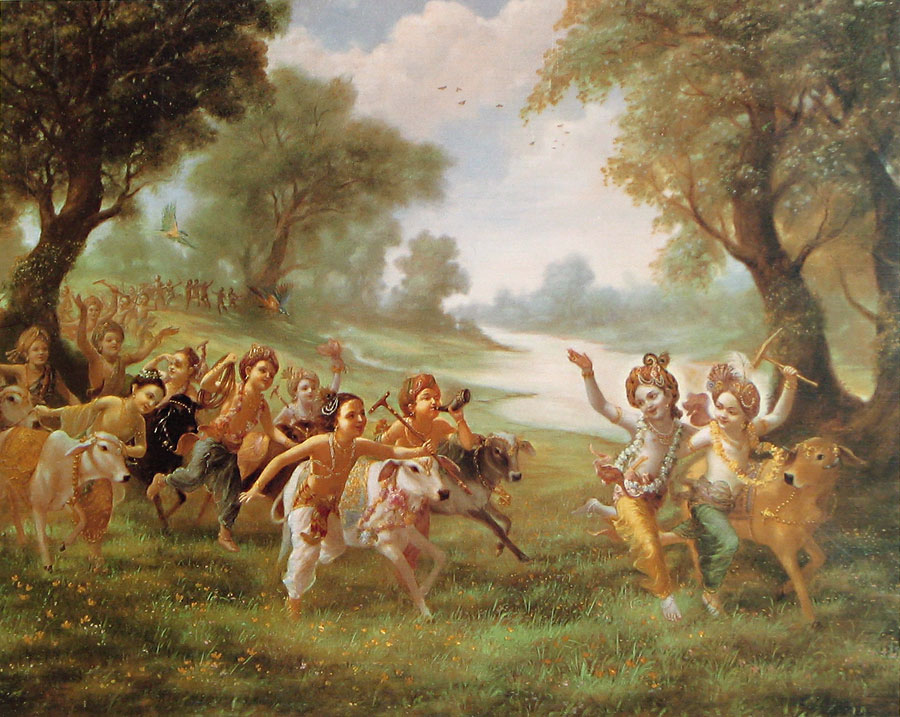
Third and the most important Rule (and the most difficult to understand/accept): No one is the original Creator, Owner, or Enjoyer of anything – even our talents, possessions, and yes, relationships too – except The Supreme Lord Krishna. This is a very difficult proposition for a normal human being because it will compel and put the jiva in a position where he has no choice but to think of the Lord as the proprietor for his hard, pranic-energy-consuming endeavors. Yes, every endeavor of ours consumes our life energy but we hardly think about energy-conservation today. So, God is the proprietor and owner of everything and we cannot change that. “How dare He?” Right? Imagine having to think of Him even during intimate acts. It is ironic that very rarely can anyone think of the Lord during the act of sex when the Lord has Himself said “dharmaaviruddho bhutesu kamosmi” (BG7.11). The act of lust and act of sex in God consciousness are so nearly incomprehensible dimensions to reconcile, that it takes many lives to probably achieve that state of servanthood, that it is easier to renounce everything. Relationships are beautifully sacred. There is a lovely quote by Maya Angelou which says, ‘the woman’s heart should be so hidden in God that a man should have to seek Him to find her.’ It should be vice versa too.
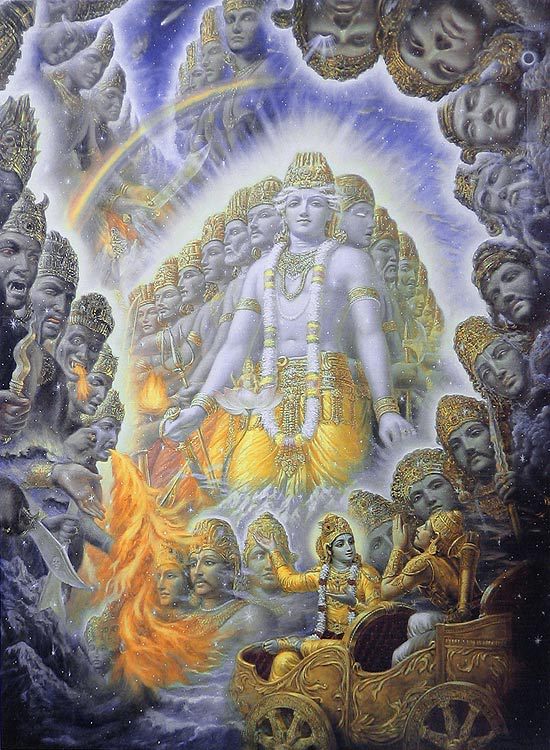
To successfully navigate our relationships in this material world, we must be able to assimilate, digest, and execute our life within the framework of these postulates. This is why the acharyas who came down to help and elevate us, insisted on the purificatory processes especially of chanting the holy names of the Lord – harinam sankirtan. It is impossible to comprehend these finer truths without ceto darpana marjanam like Sri Caitanya Mahaprabhu recommended.
So, how do we start applying these postulates and begin our journey to having meaningful relationships, which are neither entangling nor distressing?
Stay tuned for part 2
 REAL FREEDOM!