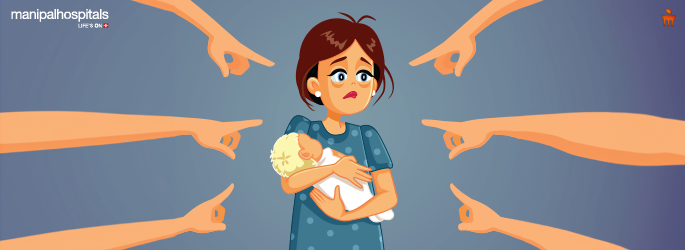
Yes I said MOTHERHOOD and not parenting
And why?
Because, while both parents shape a child’s life, there is a truth that often remains unspoken, especially in this age:
Motherhood is not shared equally.
In most families—across cultures and continents—mothers carry the emotional weight, the physical caretaking, and now, increasingly, the economic responsibility too.
They are:
- Working full-time jobs and managing full-time homes
- Expected to attend PTA meetings and Zoom calls
- Comfort emotional meltdowns while suppressing their own
- Sacrificing sleep, dreams, and sometimes their very identity
And while many fathers contribute—and some, deeply so—the societal and emotional structure still assumes:
- “The mother will figure it out.”
- “She knows what the child needs.”
- “She’ll absorb the blame if something goes wrong.”
This silent assumption becomes a prison of perfection, especially for working mothers.
And single mothers? Don’t even ask!
Introduction: The Crisis of Modern Motherhood
In today’s age, motherhood is misunderstood, misrepresented, and often painfully marginalized. Once revered as the highest of human roles—a reflection of divine love and the first experience of God for a child—the modern mother is now reduced to a role of silent service. In Kali Yuga, the age of decline and disconnection, motherhood has been swallowed by survivalism, consumerism, and performance culture.
Yet, in the Vedic tradition, motherhood is not a transactional role. It is a sacred dharma. This article explores the meaning of motherhood in Kali Yuga, the distortions it suffers, and how we can restore its essence through the lens of scripture, soul, and divine truth.
The Vedic View of Motherhood
The Vedas, Upanishads, and Smritis place the mother at the highest pedestal. “Matru Devo Bhava“ – Let the mother be worshipped as God (Taittiriya Upanishad 1.11.2). There is not a single great personality from scriptures who didn’t hold his/her mother in the highest position.
The mother is not just the giver of life, but the one who shapes dharma in her child. She is the first guru, the first emotional ecosystem, the first karmic mirror.
But…What Has Motherhood Become in Kali Yuga?
In Kali Yuga, the qualities of truth, compassion, and restraint deteriorate (amongst others) (Srimad Bhagavatam 12.2.1-2). As a result, motherhood becomes:
- A performance, not presence
- A task list, not a spiritual offering
- A source of guilt, not grace
Children grow up faster, but not deeper. Parents are expected to provide everything but are blamed again, for everything. In the noise of social expectations and digital distractions, the mother is left alone — overwhelmed, judged, forgotten.
And yet she keeps giving. Because somewhere inside her, the ancient echo of Shakti still breathes.
The Emotional Reality of Mothers Today
Today’s serious mothers carry silent wounds:
- The pain of being misunderstood by the very child she gave her life for
- The guilt of mistakes made in ignorance or overwhelm
- The helplessness of seeing a child drift away in ego, confusion, or resentment
- The grief of love that feels rejected
This is not weakness. This is the sacred wound of motherhood in Kali Yuga. And it must be honored.
Motherhood is Spiritual Sadhana
In Kali Yuga, to be a mother is to engage in constant tapasya:
- To love without manipulation
- To forgive without being asked
- To keep praying when words are no longer welcome
- To heal oneself so that our children may carry lighter/no karma
This is the real motherhood: not as a function, but as a soul-guided transmission of divine energy.
What Can hapless Mothers Do Now?
- Mother Yourself First
You cannot pour from an empty vessel. Healing your own inner child is not selfish—it’s spiritual. - Surrender Your Guilt to Lord Krishna
Regret keeps you stuck. Surrender frees you to transform. - Become the Mother You Were Meant to Be—Now
Even if your children are distant or grown, show up today – atleast mentally – with presence, purity, and patience. - Pray – DAILY
Not for reunion. But for their healing, happiness, and inner awakening in your child. Love is not always visible — but it is always vibrational. - Let Go of the Outcome
Your duty is love, not control. Be the steady flame, even if they walk in darkness.
Final Reflections
Motherhood in Kali Yuga is not meaningless. It is simply misaligned from its divine essence. To be a mother today is not to be an order-carrier, a guilt-bearer, or an emotional punching bag. It is to be a quiet warrior of unconditional love, a soul who nurtures without possession, and a devotee who offers both her child and her sorrow to Krishna.
And when you do that, dear mother, you are no longer just a parent. You are a divine purpose in disguise…even when you don’t know it.
Let them forget. Let them misunderstand. Let the world move on.
But you… you keep loving.
A Quiet Invitation to Society
If we want healthier children, we need:
- More supported mothers
- More emotionally present fathers
- More graceful community and less judgment
Let us return to a dharmic model where the mother is honored, not overburdened.
Where parenting is not a gendered war, but a shared spiritual stewardship.
Until then, we must acknowledge:
- In Kali Yuga, motherhood is not just a blessing.
- It is also an unspoken battlefield.
- And every mother still showing up with love is already a silent warrior.
 REAL FREEDOM!